
Are you a Preply tutor frustrated with wasting your time on unpaid 50 minute trial lessons, just for the student to disappear afterwards?
In particular, do you teach English as a Second Language (ESL) to young learners / kids / teens, and find that the standard advice from Preply just doesn’t work for students other than adults learners?
In this post, we break down what really makes a successful Preply trial lesson for kids, including a structured 4-part framework to turn unpaid trials into long-term recurring students.
✨ Additionally, we will highlight FREE resources, including a placement test, lesson slides, feedback templates, and more – designed to make your trial classes zero stress and zero prep, so you can get more students on Preply!
Phase 1: Pre-Class Messaging
Before the trial class even starts, use the Preply chat to qualify the student, establish their age / level / goals, and start to build rapport.
Key questions to ask (one-by-one, as part of an authentic messaging conversation):
- Could you confirm your child’s name, age, and native language?
- Why is your child learning English?
- How long have they been studying English for?
- What are they struggling with at school?
- What goals or exams are they working towards (and when)?
- Have they taken 1:1 classes before?
- Are there any particular language skills (e.g. speaking, grammar) you would like to focus on?
- Can you send me an example of your child’s recent classwork, so I can get an idea of their current level?
By asking these questions upfront, you can get more detailed responses from parents (as they have time to write answers and can use translation apps to help). It also helps to remind them of their upcoming trial class to reduce no-shows.
💡 Top tip: Make notes of this information in a student profile document for easy reference in the future.
Additionally, in your pre-class messaging, be sure to clarify expectations for the trial class. Ask parents to be present throughout the class to support their child, remind them to sit in a quiet study environment at a desk (not while driving around town!), and check tech requirements (i.e. using an iPad or computer, not a mobile phone).
Phase 2: Placement Test and Mini Teaching
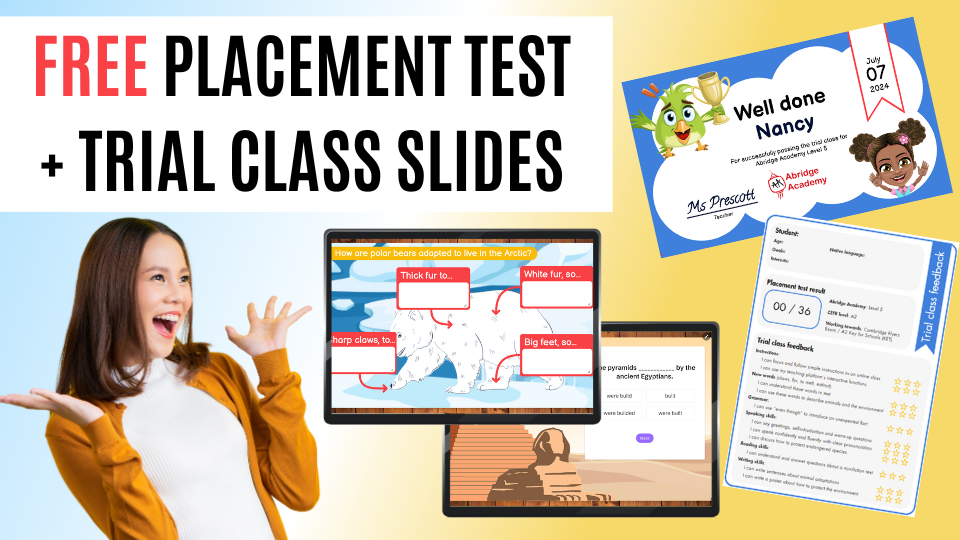
In your trial class itself, get straight into engaging the child in English, using these free trial class resources from Abridge Academy. You can break this down into:
- 5 mins: Warm-up discussion, introducing yourself, asking their name / age / hobbies, etc.
- 10 mins: CEFR / Cambridge exam placement test, to quickly assess their level while keeping it fun and interactive.
- 15 mins: Mini teaching session, using a short trial class corresponding to their level from the placement test. The Abridge Academy trial classes are specifically designed to provide lots of engaging activities, quick wins, and fun games.
- 5 mins: Feedback and celebration, using the built-in feedback slide and certificate.
This trial class approach is designed to provide an engaging (yet zero-prep) learning experience which shows off your teaching skills and gets kids excited to learn English with you.
💡 Top tip: Focus on “quick wins” such as new vocabulary, a more extended sentence structure, or a game, particularly for shy students. These give them an easy confidence boost and make progress more obvious.
Phase 3: Learning Plan and Sales Pitch
In the remaining 15 minutes of your 50 minute trial session, call the parents over to present and discuss a longer-term plan of future classes.
‼️This is absolutely essential to prepare for, as it is your big “sales pitch” moment!
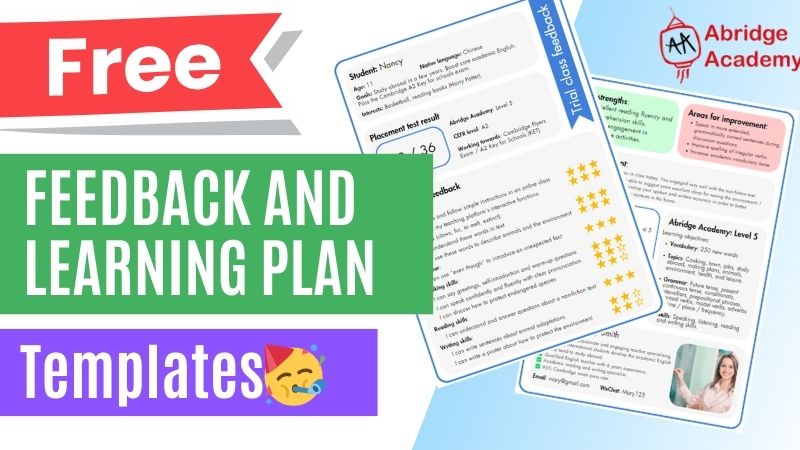
Start by discussing how the child did in their trial class, including not only praising their excellent progress, but also highlighting areas to continue working on. If you say their child is already perfect, there’s no need for them to book more classes!
Link this to your longer term learning plan for the student (free templates for this are provided under the relevant Abridge Academy trial class slides in your free trial class toolkit). This should include:
- A summary of their strengths / weaknesses, including identifying skills to work on and *how* you will do this (e.g. specific courses or learning strategies, such as roleplays or grammar exercises).
- Breaking down their ultimate goal (e.g. an exam) into smaller milestones / checkpoints over a clear timeline (e.g. the next 6-12 months).
- Suggesting a recommended class frequency, e.g. twice per week, which would allow their child to achieve their goal within their desired timeframe.
- Setting expectations of out-of-class work, including lesson preview tasks and homework workbooks (don’t worry, these are all provided for you by Abridge Academy!).
Finally, end with an opportunity for parents to ask questions and confirm their interest in booking classes with you. For example:
- Does this learning plan align with your goals for [Student]?
- When would you like to start classes? I have availability on [suggest days later this week].
- Would you like me to show you my calendar and explain how to schedule classes?
This gets them to confirm and commit to taking classes going forwards.
Phase 4: Follow-Up to Prevent Ghosting
The process isn’t over once the trial class ends! One of the biggest frustrations for Preply tutors is trial class students who ghost you after the session. To avoid this, send a structured post-class message in the Preply chat within 2 hours of ending. Include:
- A positive message reinforcing how excited you are to help their child.
- The student’s assessed CEFR level / Cambridge exam level from the placement test.
- A customised feedback report & learning plan (using the free Canva templates provided by Abridge Academy).
- Direct instructions on how to subscribe on Preply and schedule classes.
🚀 If there is no response within 24-48 hours, send a polite follow-up message. Here are some suggested quick messages (which you could send gradually over a two week period of being ghosted):
- Message 1 (day 2 – learning plan reminder): Hi [parent], I hope you and [child] are having a great week. Let me know if you have any questions about the learning plan I sent over! Looking forward to seeing you again in class soon, [teacher]
- Message 2 (day 5 – finalising schedule): Hi [parent]! I’m currently finalising my teaching schedule for next week. You mentioned that [student] would like classes on [days]. If you would like to lock in those regular times for our lessons, I would encourage you to book soon. Alternatively, please let me know if a different time would be more convenient for you and I can adjust my schedule! Thanks, [teacher]
- Message 3 (day 9 – add urgency): Hi [parent], I know it’s a busy time of year, but I just wanted to send you a quick message to check in. Are you still interested in starting English lessons for [student] at [regular lesson times]? Please let me know by [deadline] as I have some other students also keen for that lesson time. I’m happy to adjust our plan or schedule to fit what works best for your family! Best wishes, [teacher]
- Message 4 (day 14 – breakup message): Hi [parent]! Since I haven’t heard back, I’m going to release [student]’s reserved time slot on Preply for now. If you would ever like to restart lessons in the future, feel free to send me a message. Wishing you all the best, [teacher].
These messages are intended to be quick and easy to understand (including through translation apps), sound positive / helpful, and gradually increase a sense of urgency / pressure to confirm the booking.
Summary
Trial classes on Preply shouldn’t feel like an unpaid chore. When you switch from running an unstructured 50-minute chat to delivering a professional 4-part consultation, you accomplish three things:
- You eliminate unpaid prep time by using pre-made placement tests and level-specific trial decks.
- You position yourself as an expert by presenting a clear 6-to-12-month learning roadmap rather than just “another tutor.”
- You convert more trial students into monthly subscribers, building a predictable, recurring income on Preply.
🎁 Get Everything You Need to Run Zero-Prep Trials (100% Free!)
You don’t need to spend hours building slide decks on Canva or writing learning plan templates from scratch.
With a free Abridge Academy account, you get instant access to our complete FREE Trial Class Toolkit:
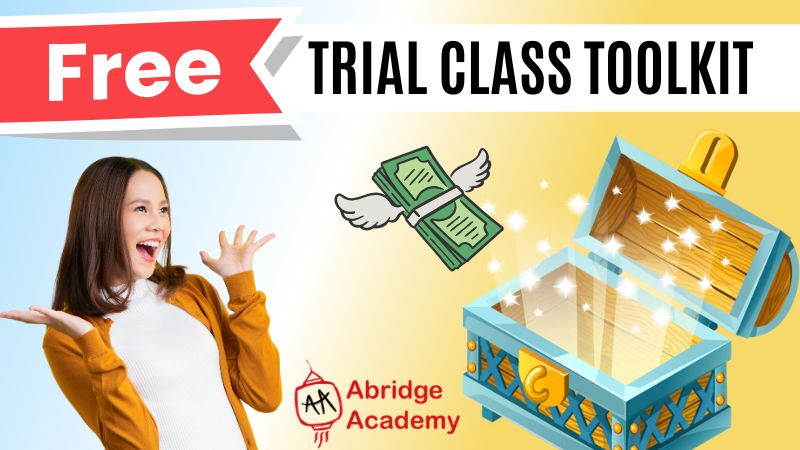
- 🎯 Interactive CEFR Placement Test: Quickly evaluate your student’s level in 10 minutes.
- 🚀 Level-Specific Trial Lesson Decks: High-energy, gamified slides.
- 🏆 Student Celebration Certificates: Built-in rewards to end your trial call on a high note.
- 📋 Customisable Learning Plan Templates: Professional Canva templates to present clear student roadmaps to parents.
Stop wasting your unpaid trial hours. Sign up for your free Abridge Academy account today and transform your next Preply trial class into a long-term subscriber!