
Get Students from Facebook Groups
Existing online communities such as Facebook groups are a gold mine for online ESL teachers looking for new students!

How to use Facebook Groups to Find Students?
When transitioning to independent online teaching, finding your first few private students can feel like an uphill battle. Many teachers flock to Facebook groups, but often make the mistake of simply dropping a link to their tutoring calendar into massive, spam-filled groups, only to hear crickets.
Facebook groups remain an absolute goldmine for finding high-quality, paying students—provided you use the right strategy. It is all about building relationships, demonstrating your expertise, and gently guiding parents towards a trial class.
Here is the step-by-step strategy to effectively source private ESL students from Facebook groups.
Step 1: Set Up Your Profile for Success
Step 2: Find the Right Kind of Facebook Groups
The most common mistake online teachers make is joining groups named “Learn English for Free” or “ESL Teachers and Students.” These mega-groups (often with 100,000+ members) are saturated with other teachers advertising their services and students looking for free language exchanges.
Instead, you need to find niche groups where your ideal paying clients hang out, without other teachers competing for their attention.
Example search stems:
- English learners in…
- High school parents in…
- International students in…
- Homework help for…
- Homeschooling families in…
- Small businesses in…
- New moms and dads in…
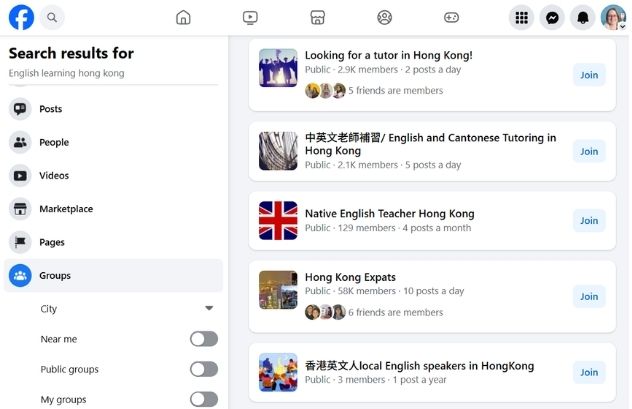
💡Bonus tip: Search for these terms in local languages, to reach non-English medium groups.
Step 3: Build Rapport and Establish Expertise
Do not join a group and immediately post an advert for your classes. Group admins will likely delete it, and members will ignore it. Instead, you need to establish yourself as a helpful, knowledgeable authority.
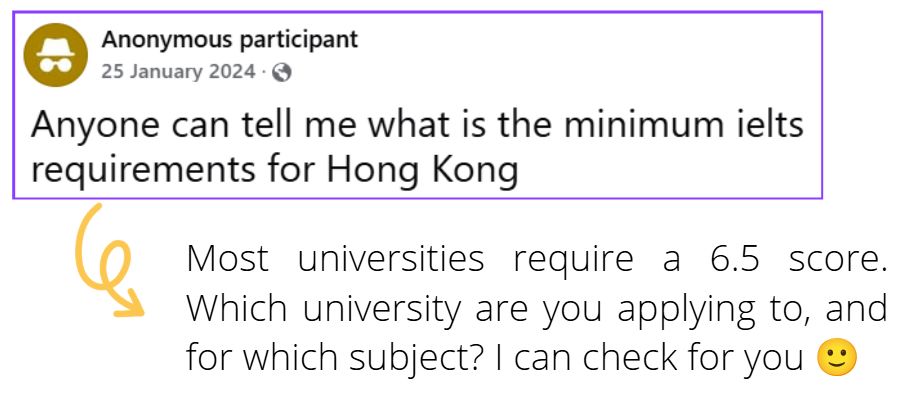
- Answer Questions: Spend 15 minutes every day just answering questions. For example, if a parent asks for advice on bilingual parenting or exam preparation, write a thoughtful, detailed reply.
- Extend Conversation Threads: Ask them follow-up questions in return, to better answer their question and build rapport.
- Be Consistent: Show up regularly. When people repeatedly see your name attached to high-quality, helpful advice, they will naturally begin to view you as the go-to English expert in that community.
Step 4: Share Valuable Resources
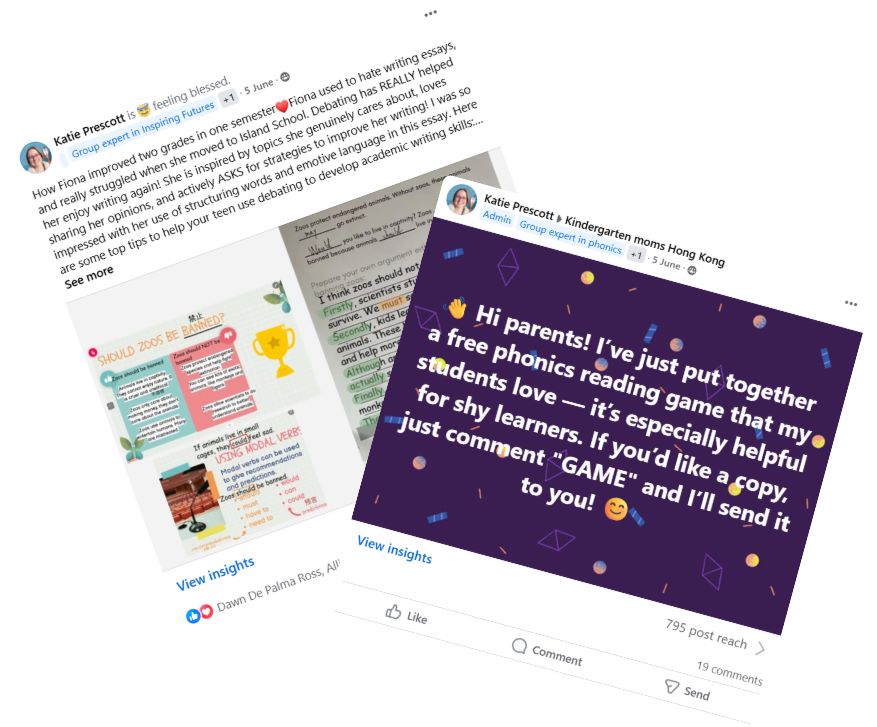
Share Value, Not Adverts: Once you are established, post helpful, actionable tips. For example, you could share a post titled: “3 fun games to practise phonics at home this weekend”.
- Share valuable tips, free resources, and student stories – remember, these are cold leads who aren’t ready to purchase yet!
- Encourage comments, use polls, create events, etc to boost engagement in the algorithm.
- Don’t include links in the post – ask people to comment for the link.
- No more than 5 posts (across all groups) per day, and edit the text slightly / adjust for the group.
IMPORTANT: Check the group policies and track which groups get best results to further optimise your strategy.
Step 5: Gently Convert via Direct Messages (DMs)
Once you have built rapport in the public comments, the next step is transitioning the conversation to a private direct message.
- The Transition: If you have been chatting with a parent in the comments about their child’s reading struggles, reply publicly with: “I actually have a great free resource for this. I’ll send you a quick DM with the link!”
- The Conversation: In the DM, send the promised resource, then ask an open-ended question: “How long has your son been learning English at school?”
- The Invitation: Once they share their struggles, gently offer a solution. “It sounds like he just needs a bit of one-on-one speaking practice to build his confidence. I’d be happy to run a quick, free 30-minute trial class with him next week to see if I can help?”
The golden rule here is never to cold-pitch. Any mention of your paid teaching services should feel like an offer to help them, rather than a sales pitch.
BONUS: Advanced Strategies
Once you have mastered the basics of group networking, you can implement these advanced strategies to generate leads on autopilot.
1. Use Freebies to Build your Email List
Instead of just offering advice in a post, offer a free, downloadable resource (a “lead magnet”). This could be a PDF checklist, a set of printable vocabulary flashcards, or a short e-book (e.g., “The Parent’s Guide to Preparing for the Cambridge Starters Exam”).
Ask group members to comment “YES” if they want a copy. You can then DM them a link to a landing page where they enter their email address to download the resource, seamlessly moving them from a Facebook group onto your private email marketing list.
2. Organise a Free Webinar or Workshop
Speak to the group admin and ask for permission to host a free, 30-minute live workshop for their members. You can create a Facebook Event within the group for a masterclass on a topic like “How to Support Your Child’s English Reading at Home”.
At the end of your highly valuable presentation, offer attendees an exclusive discount on a trial class or a lesson package. This establishes massive authority and allows you to pitch to a warm, captive audience.
Summary
Facebook groups can be an amazing place to find students for your independent teaching business. They are full of potential new clients all interested in your specific niche.
However, don’t make the mistake of just posting promotional flyers! Instead, focus on answering questions and adding value to the community.
By positioning yourself as a helpful group member rather than a pushy salesperson, you will build genuine trust with parents and secure high-quality, long-term students.
P.S. Looking for more, easy marketing strategies? Join our Social Media Marketing email list!
Oh! I would like to know if there is a way to add hashtags to get my page noticed when people search for English teachers.
Thank you for walking me through my FB page set up. I feel more confident in myself now.